Stage and Bandshell
For this stage and bandshell, I worked with the designer of a public pop-up park to redesign and rebuild a landmark structure that had become one of the park’s defining features. The original stage had only been intended to last 6–12 months, but after several years of exposure to the elements, it was beginning to deteriorate. The minimal framing and plywood floor had been built directly on the ground and were starting to sink into the soil, leaving the stage with a noticeable slope. The bandshell itself also took up more than half of the deck, limiting the amount of usable stage space.
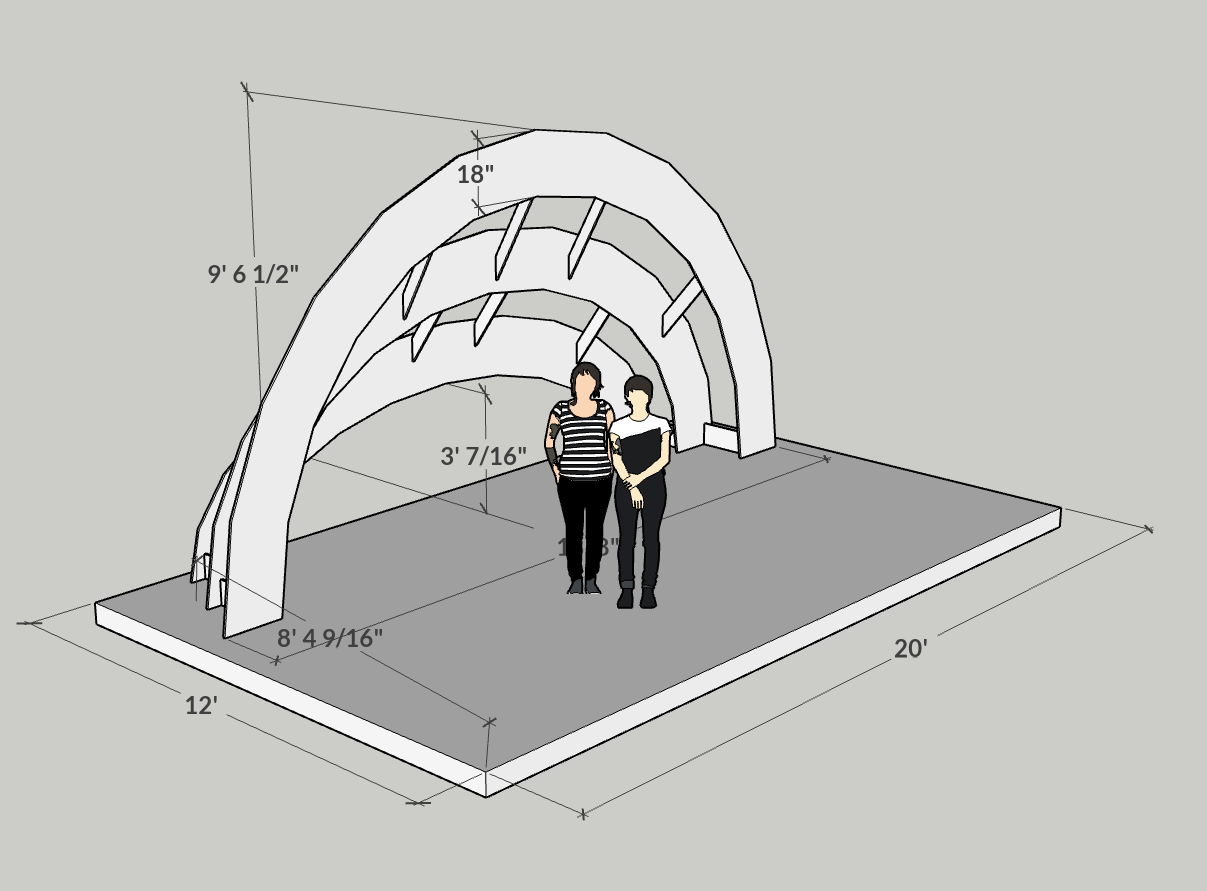
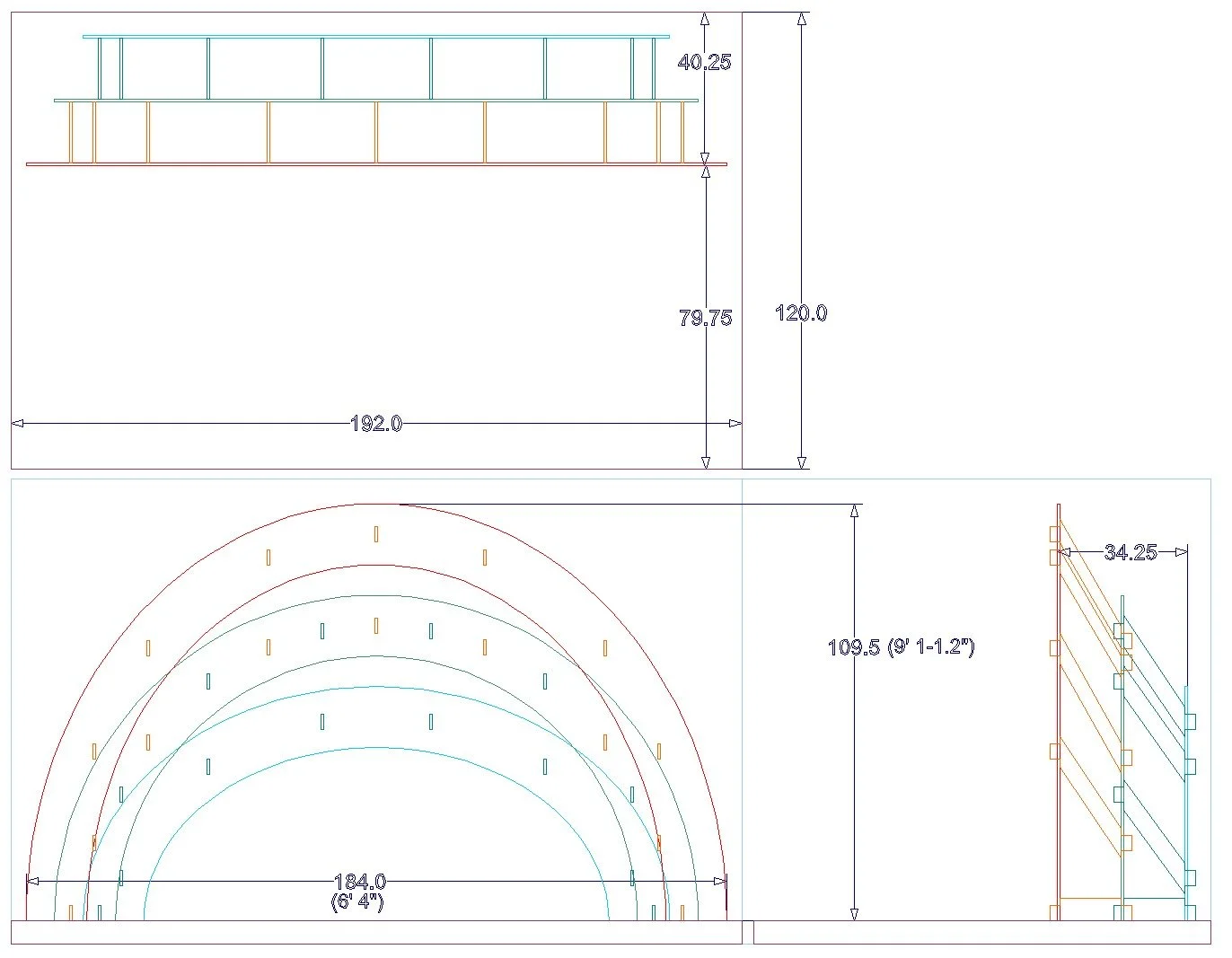
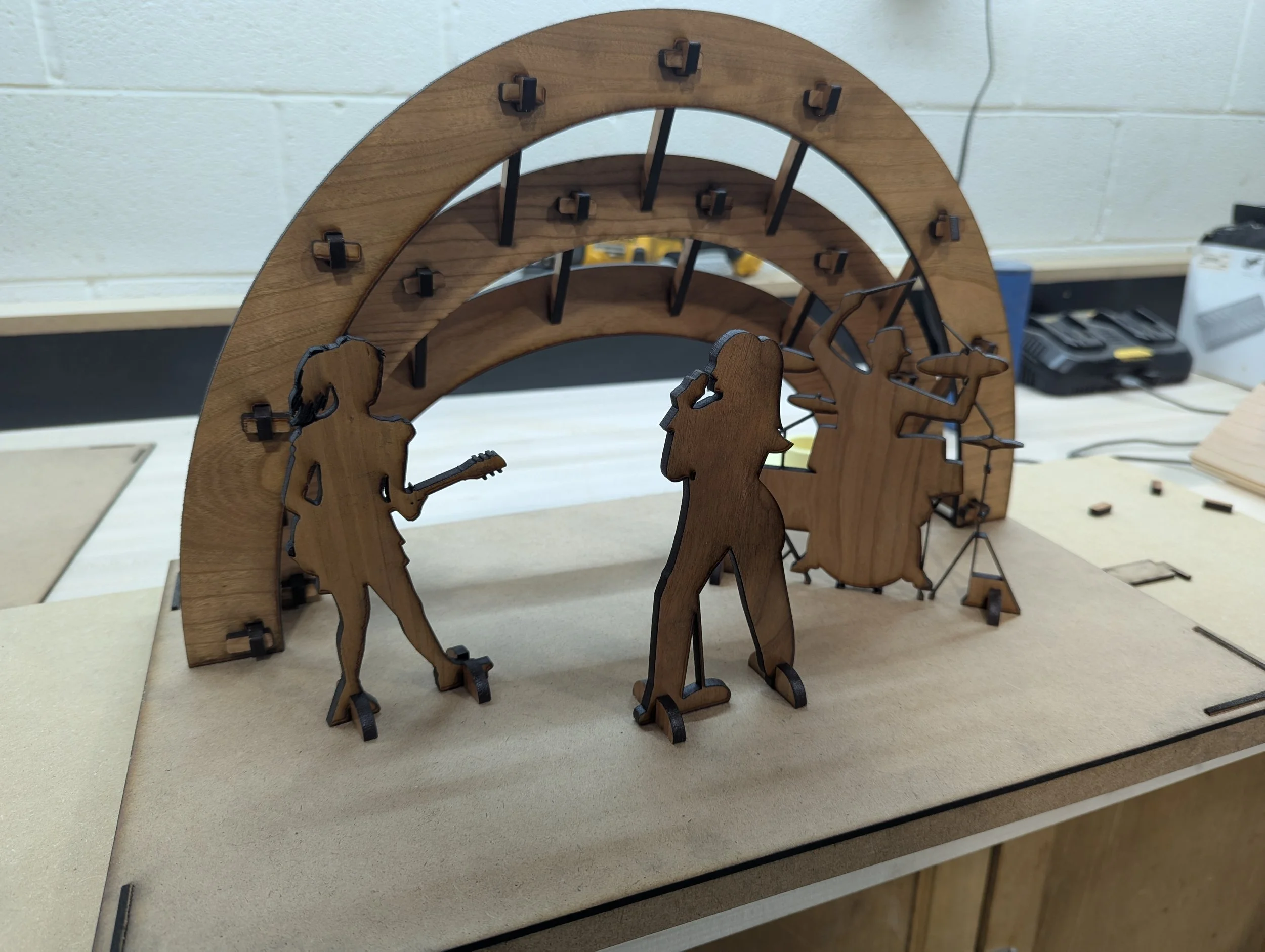
The goal was to create a larger, more functional stage without expanding its existing footprint, while working within a tight budget. I developed a new design that reduced the amount of sheet goods required while maintaining the bold, layered appearance of the original. By simplifying the joinery and stacking fewer layers more efficiently, I was able to create a structure that was both more economical and sturdier. I worked through several iterations of the joinery to test the concept, then produced detailed SketchUp drawings, isometric drawings, and a scale model to communicate the design and get the client’s approval before construction.
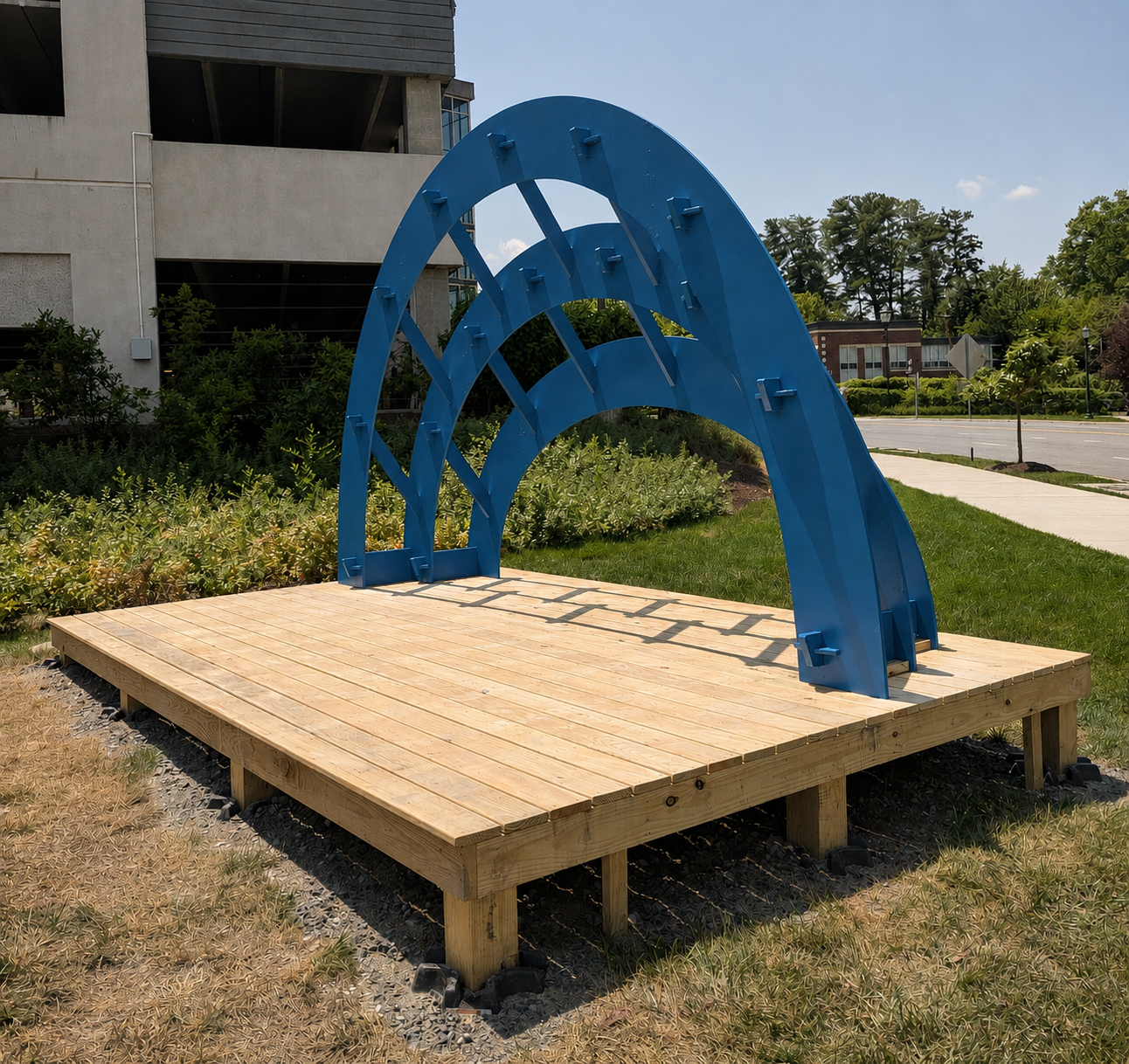
The foundation presented another challenge. Because the park was designed as a temporary installation, the stage could not use a conventional permanent foundation or concrete footings. At the same time, I wanted the new structure to be genuinely safe and durable rather than simply treating its temporary status as an excuse for minimal construction. I used standard deck-building recommendations and local code guidelines as a reference for sizing and laying out the joists, stretchers, and support posts, essentially designing the structure as a freestanding deck while finding a foundation solution appropriate for a temporary site.
For the installation, we leveled gravel footings at the support locations and developed a new style of support block that kept the posts elevated off the ground while allowing for drainage. The result was a stronger, more usable stage that retained the visual character of the original landmark while addressing the structural and functional problems that had developed over years of use.
This installation can be seen at the Pike District Pop-Up Park in Bethesda.